Do you care if your food was raised in a pasture, lived in a cage, or if grass was part of the diet of the animal on you dinner plate? When you see terms on food product labels indicating “pasture-raised,” “cage-free,” “free-range” or “grass-fed,” do you know what these terms actually mean?
Local
Typically, these products travel less than 400 miles from where they are produced. “Local” may also include products produced within the same state they are being sold. According to Matthew Burch, of OKC-based Urban Agrarian, “local food is more about how something is grown than if it comes from a strictly defined geographical region.”
Cage-Free
Most egg-laying hens are housed in long
barns and are further enclosed in “battery cages” which may contain 4-7 chickens. Cage-free hens are still housed in long barns but also have free access to food, water, and the ability to roam the barn. However, they often don’t have access to outdoor areas.
Free-Range
Unlike cage-free eggs, free-range eggs are granted some time outside but spend the bulk of their time in cramped housing. Free-range hens do not require a defined time spent outside, outdoor space conditions, or particular feed type. Free-range also does not indicate chickens are humanely raised like many people are led to believe.
Pasture-Raised
This term is limited to omnivores who don’t gather all of their daily nutritional needs from plants alone. Pasture-raised animals spend most of their time roaming  and foraging different areas of farms but are still fed grain-based feed when necessary. Locally, The Wedge Pizzeria in OKC, uses a third party certified pasture-raised chicken on their pizza! Look for Global Animal Partnership (GAP) and Animal Welfare Approved (AWA) certifications on these meats.
Grass-Fed
This term is limited to ruminant mammals, i.e. cattle, sheep, and goats
goats
. These animals eat plant-based diets alone, but may be fed grains when plant-based forage is absent. These products may be certified as “American Grassfed” by the American Grassfed Association, indicating a plant- based diet. Keep in mind AGA does not require all products also be certified organic.
USDA Organic
This is the only USDA policed and regulated product label that  farmers and producers spend years working to acquire. USDA organic certification indicates the product is free from genetically modified organisms (GMO’s). For produce, synthetic fertilizers, pesticides or herbicides are not allowed and the same guidelines apply for areas organic-meat animals graze on. Hens must also be fed non-GMO feed and cannot be given hormones or antibiotics.
-HM

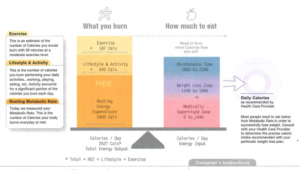 is dead or alive (helpful information for all of us to know), and how many calories your body burns on a daily bases. The dietitians at Banister nutrition perform this test on the majority of all new patients to determine your accurate calorie burn. Reliable energy information is the foundation to calculate all calorie and nutrient requirements for any diagnosis.
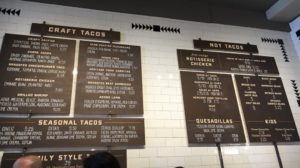 I tried Cultivar in Automobile Alley. Cultivar is a “farm-to-fire” Mexican dining experience that I absolutely enjoyed. The menu included fresh tacos, burritos, burrito bowls, salads and more. The food was fresh, with priority given to local ingredients, and included fun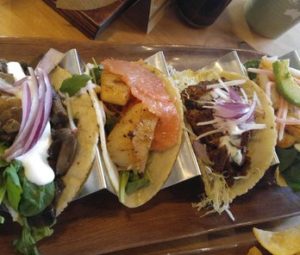
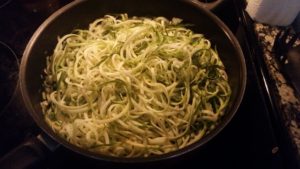 gadget, for us to play with! The Zoodler, which is similar to a Veggetti or Spiralizer, cuts various vegetables into long, thin spirals. The Zoodler cuts into 2 sizes of noodles, one similar to spaghetti and the other similar to linguini. Eggplant and zucchini were on sale the week I tried our Zoodler, so I decided to make eggplant parmesan.
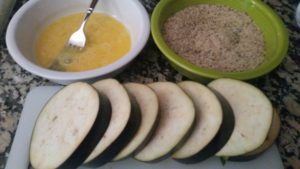 sauté with some olive oil and pepper. My “noodles” were topped off with baked eggplant coated in seasoned breadcrumbs and spaghetti sauce. I tried to dry out my noodles with just a towel and no salt, but you can see the noodles added extra water to the plate.