
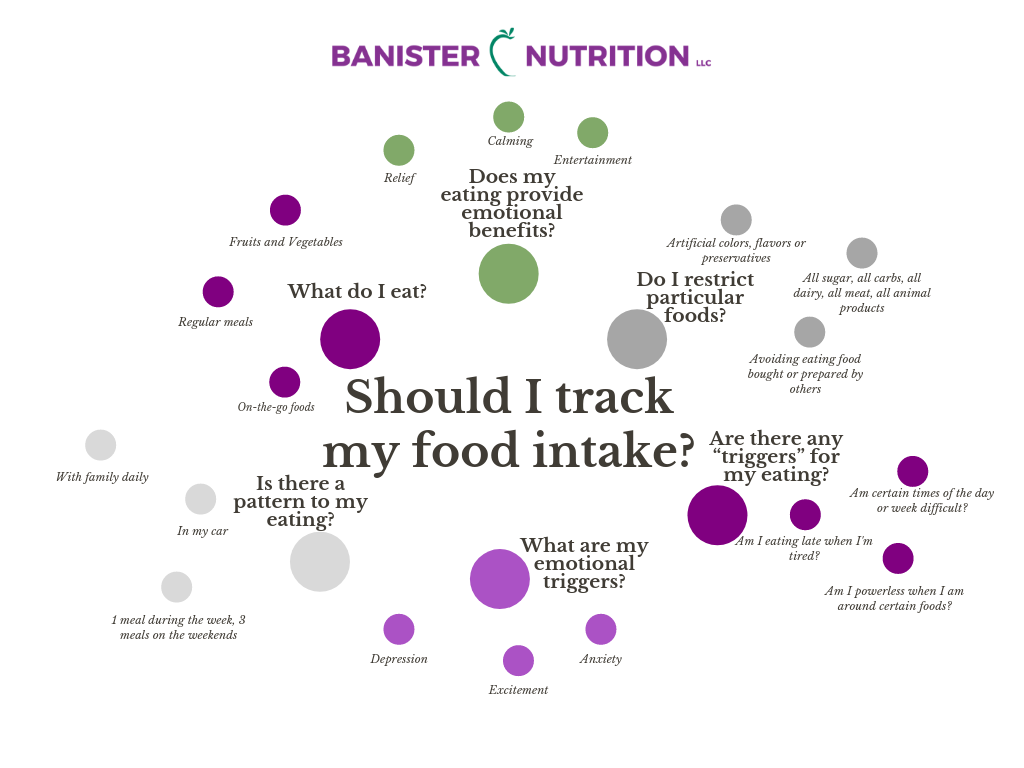
Should I track my food intake?
There is much to be learned about your relationship with food when you track or monitor your food intake. Monitoring your food intake can be beneficial for everyone, but especially if you have diabetes, weight concerns, an eating disorder, disordered eating, or GI issues.
Monitoring food can answer the following questions:
- What do I eat?
- Do I restrict particular foods?
- Is there a pattern to my eating? ie. Do I eat a certain way during the week vs weekend, or when I’m alone vs with company?
- Are there any “triggers” for my eating? ie. Am I eating late when I’m tired?
- What are my emotional triggers? ie. depression, loneliness, boredom, anxiety, or anger.
- Does my eating provide emotional benefits—is it calming, entertainment, an escape, or relief?
Just as a choir cannot improve their harmony if they don’t recognize the current dissonance, it is impossible to change anything if you are not aware of your current situation.
It is important to monitor your intake to help you recognize your behaviors, emotions, feelings, and exercise habits. Being honest with yourself is the only way to make progress.
Track your food intake as soon as possible after consuming. This will help you become more aware of your behaviors, emotions, feelings in real-time then you can start exploring further into your intake.
We encourage our patients to use a food intake record and not electronic devices. Electronic devices often lack the ability to make notes of the very important aspects of your food intake, such as family circumstances, emotions, and feelings. A food record can include time, place, with whom and degree of hunger during intake.
The dietitians at BN will support your monitoring efforts. Together, you will brainstorm various pathways to changing your thinking, behaviors and reaching your health goals. It’s a rewarding journey to realize you can make changes you never thought possible. Your trek to a healthy, peaceful relationship with food is far more than “eat this not that.”
CB
